

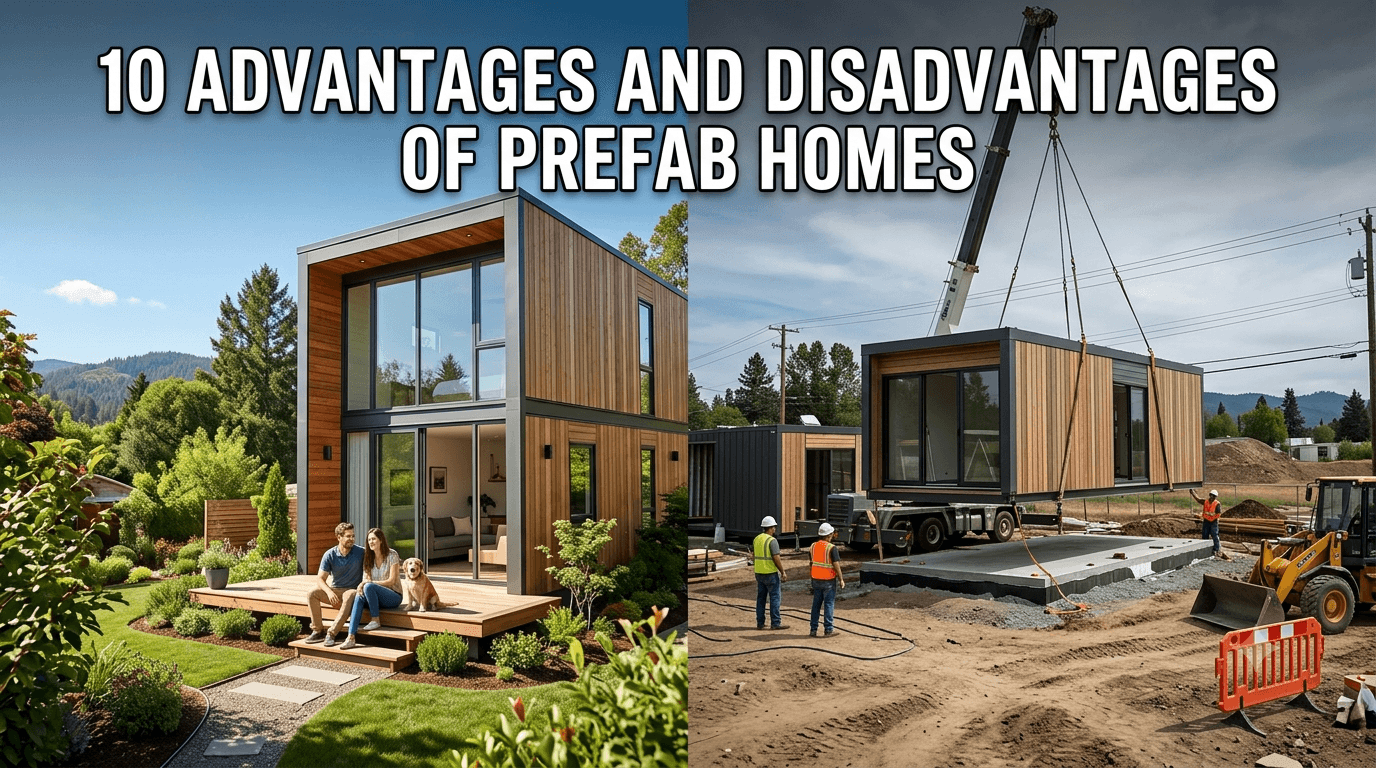
10 Advantages and Disadvantages of Prefab Homes
Buying a home is one of the biggest financial decisions most people make. Over the past decade, prefab homes have become increasingly popular because they offer faster construction, lower costs, and modern designs compared to traditional houses. Whether you are building your first home, investing in rental property, or searching for an eco-friendly lifestyle, prefab homes deserve serious consideration.
What Are Prefab Homes?
Prefab homes, also known as prefabricated homes, are houses that are manufactured in sections inside a factory before being transported to the construction site for final assembly.
Unlike traditional homes that are built entirely on-site, prefab homes are produced in controlled environments, reducing weather delays and improving construction quality.
There are several types of prefab homes, including:
- Modular homes
- Panelized homes
- Manufactured homes
- Steel prefab homes
- Container homes
- Tiny prefab houses
Today, prefab homes are available in nearly every architectural style, from minimalist cabins to luxury villas.
Why Are Prefab Homes Becoming Popular?
The growing demand for affordable housing, rising construction costs, and increasing interest in sustainable living have made prefab homes one of the fastest-growing segments in the housing industry.
Homeowners appreciate:
- Faster construction
- Lower labor costs
- Better energy efficiency
- Flexible designs
- Reduced construction waste
These benefits make prefab housing attractive for families, retirees, investors, vacation home owners, and businesses alike.
Top 10 Advantages of Prefab Homes
1. Faster Construction Time
One of the biggest advantages of prefab homes is speed.
Traditional houses often take several months—or even over a year—to complete. Prefab homes can often be manufactured and assembled in just a few weeks, depending on the design and site preparation.
Why this matters
- Move in sooner
- Less construction disruption
- Faster return on investment
- Lower financing costs
2. Lower Construction Costs
Prefab homes generally cost less than traditional houses because factory production minimizes labor expenses and material waste.
Cost-saving factors
- Bulk purchasing of materials
- Efficient manufacturing
- Reduced labor requirements
- Less weather-related delays
These savings can make homeownership more accessible for many buyers.
3. Better Quality Control
Factory-built homes undergo standardized production processes with multiple quality inspections.
Benefits include
- Consistent workmanship
- Better structural accuracy
- Fewer construction defects
- Controlled building conditions
This controlled environment helps reduce many of the issues commonly associated with outdoor construction.
4. Environmentally Friendly
Modern prefab homes generate less waste than conventional construction projects.
Eco-friendly advantages
- Reduced material waste
- Lower carbon footprint
- Efficient insulation
- Sustainable building materials
- Lower energy consumption
Many prefab manufacturers also incorporate recycled and renewable materials.
5. Energy Efficiency
Most prefab homes are designed to meet modern energy standards.
Energy-saving features
- High-quality insulation
- Double-glazed windows
- Energy-efficient doors
- Solar panel compatibility
- Smart home integration
These features can reduce monthly utility bills while improving comfort.
6. Modern and Customizable Designs
Today’s prefab homes are available in a wide range of styles and layouts.
Popular design options
Contemporary homes
Clean lines and open floor plans.
Luxury villas
Premium finishes with spacious interiors.
Tiny homes
Ideal for minimalist living.
Family homes
Designed for larger households with flexible layouts.
Many manufacturers also allow buyers to customize floor plans, finishes, and exterior materials.
7. Improved Structural Precision
Because prefab components are produced using advanced machinery, measurements are highly accurate.
This precision reduces:
- Construction errors
- Material waste
- Future maintenance problems
8. Less Weather Delay
Rain, snow, or extreme heat can delay traditional construction.
Since prefab homes are manufactured indoors, production continues regardless of weather conditions, helping projects stay on schedule.
9. Flexible Expansion of Prefab Homes
Many prefab homes can be expanded later by adding new modules.
Examples include
- Additional bedrooms
- Home offices
- Guest suites
- Garages
- Outdoor living spaces
This flexibility allows homeowners to adapt as their needs change.
10. High Resale Potential
Modern prefab homes are gaining acceptance among buyers due to improved construction quality and attractive designs.
Well-maintained prefab homes in desirable locations can retain strong resale value, particularly when built to high standards and equipped with energy-efficient features.
Top 10 Disadvantages of Prefab Homes
1. Land Is Usually Not Included
Most prefab home purchases only include the structure.
Buyers still need to purchase land separately and prepare the site before installation.
2. Transportation Costs
Large prefab sections require specialized transportation.
Transportation expenses vary depending on:
- Distance
- Road access
- Module size
- Delivery permits
Remote locations can significantly increase delivery costs.
3. Site Preparation Expenses
Before installation, the property often requires:
- Foundation work
- Utility connections
- Drainage systems
- Road access
- Soil preparation
These additional costs should be included in your overall budget.
4. Limited Customization With Some Manufacturers
While many companies offer customization, budget-friendly models may provide fewer options for:
- Floor plans
- Exterior finishes
- Roof styles
- Interior layouts
Comparing manufacturers can help you find the right balance between price and flexibility.
5. Financing Can Be Different of Prefab Homes
Some lenders have different requirements for prefab or manufactured homes.
Buyers should compare mortgage options and confirm financing eligibility before making a purchase.
6. Local Building Regulations for Prefab Homes
Building codes and zoning rules vary by region.
Some areas may have restrictions regarding:
- Home size
- Foundation requirements
- Utility connections
- Architectural appearance
Always verify local regulations before ordering a prefab home.
7. Delivery Challenges of Prefab Homes
Large modules may be difficult to transport to sites with:
- Narrow roads
- Bridges with weight limits
- Mountainous terrain
- Limited access
Planning delivery logistics early helps avoid delays.
8. Fewer Design Changes After Manufacturing
Once production begins, making design changes can become expensive or impractical.
It’s important to finalize your plans before manufacturing starts.
9. Limited Availability in Some Areas
Not every region has local prefab manufacturers.
This may increase:
- Shipping costs
- Delivery times
- Installation expenses
Research suppliers in your area before choosing a builder.
10. Public Misconceptions
Although modern prefab homes are built to high standards, some people still associate them with outdated mobile homes.
Fortunately, growing awareness and improved designs are changing these perceptions.
Are Prefab Homes Durable?
Yes, When Properly Built
Modern prefab homes are engineered to meet or exceed local building codes.
High-quality prefab homes are designed to withstand:
- Heavy rain
- Strong winds
- Snow loads
- Earthquakes (where applicable)
- Long-term daily use
Regular maintenance further extends their lifespan.
Who Should Consider Buying a Prefab Homes?
Prefab homes are an excellent option for:
- First-time homebuyers
- Families
- Retirees
- Vacation property owners
- Real estate investors
- Remote workers
- Eco-conscious homeowners
- Businesses needing temporary or permanent structures
Frequently Asked Questions
Are prefab homes cheaper than traditional homes?
In many cases, yes. Factory production can reduce labor costs and material waste, although land, transportation, and site preparation still add to the overall budget.
Can prefab homes be customized?
Yes. Many manufacturers offer customizable layouts, finishes, and optional upgrades, though the level of customization varies by company.
Are prefab homes energy efficient?
Most modern prefab homes are designed with energy efficiency in mind, using quality insulation, efficient windows, and sustainable building practices.
How long do prefab homes last?
With quality construction and proper maintenance, prefab homes can last for many decades, comparable to traditional houses.
Are prefab homes a good investment?
For many buyers, prefab homes offer a strong combination of affordability, speed, and efficiency. Their value depends on location, build quality, and market demand.
Final Thoughts about Prefab Homes
Prefab homes have transformed the housing market by making homeownership more accessible, efficient, and environmentally responsible. Faster construction, lower costs, energy savings, and modern designs make them an attractive choice for a wide range of buyers.
At the same time, prospective homeowners should carefully consider transportation, site preparation, financing, and local regulations before making a purchase.
By weighing these advantages and disadvantages, you can make a well-informed decision that aligns with your budget, lifestyle, and long-term goals. As technology and construction methods continue to advance, prefab homes are likely to play an even larger role in the future of residential housing.