

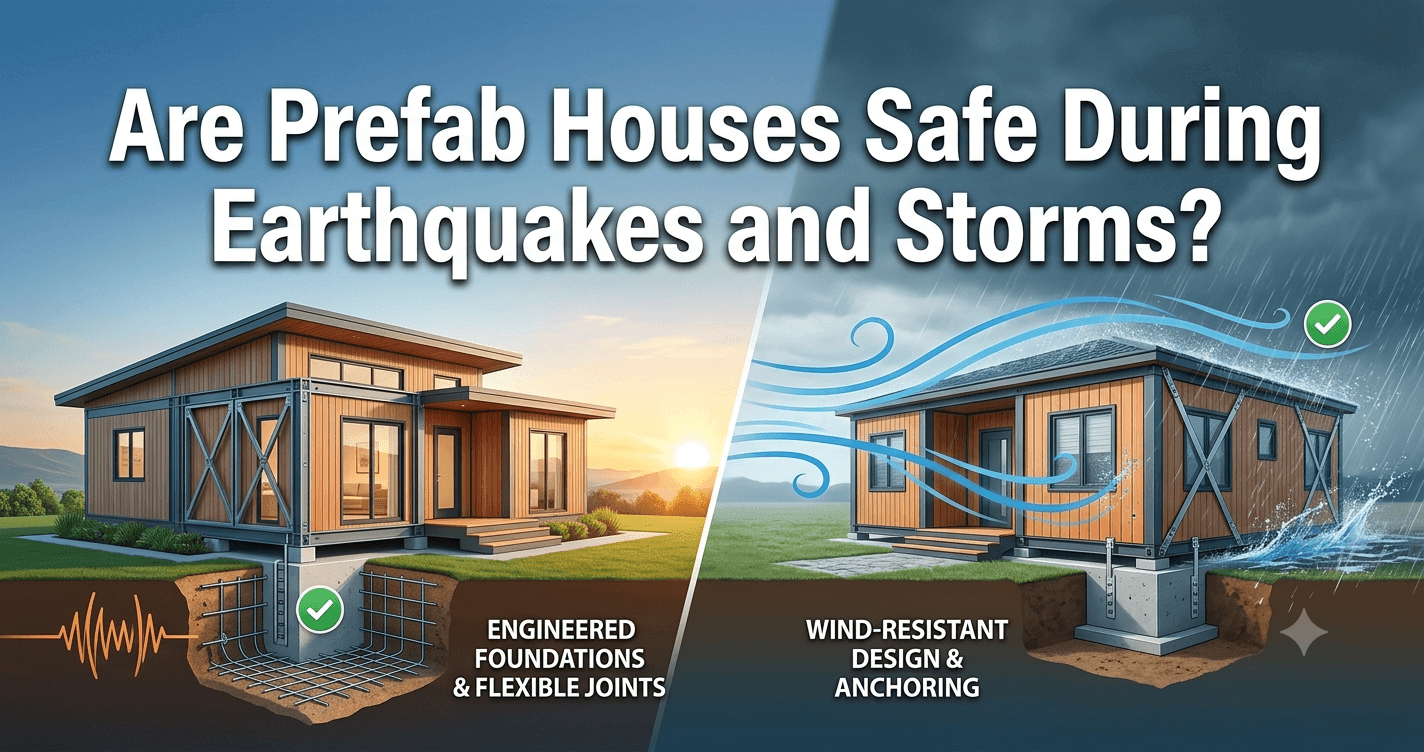
Are Prefab Houses Safe During Earthquakes and Storms?
Modern prefab houses have gained worldwide popularity because they are affordable, quick to build, energy efficient, and highly customizable. However, one question remains at the top of every buyer’s mind: Are prefab houses safe during earthquakes and storms?
The answer is yes—when designed, manufactured, and installed according to local building codes, modern prefab houses are engineered to withstand many of the same natural disasters as traditional homes. In many cases, they can even outperform conventional buildings due to precision manufacturing, advanced engineering, and high-quality construction materials.
In this guide, you’ll learn how prefab houses perform during earthquakes, hurricanes, heavy rain, strong winds, snowstorms, and other extreme weather conditions, along with the factors that determine their overall safety.
What Is a Prefab House?
A prefab house, also known as a prefabricated home, is a building that is manufactured in sections inside a controlled factory environment before being transported to the construction site for final assembly.
Unlike traditional homes that are built entirely on-site, prefab houses benefit from factory precision, consistent quality control, and reduced exposure to weather during construction.
Common types include:
- Modular Homes
- Panelized Homes
- Prefabricated Steel Houses
- Container Homes
- Tiny Prefab Houses
- Portable Homes
Why Safety Is a Major Concern
Natural disasters continue to affect millions of homes worldwide every year. Earthquakes, hurricanes, tornadoes, floods, heavy snowfall, and powerful storms can cause severe structural damage if a building is not designed correctly.
Homebuyers want reassurance that their investment can protect their family and belongings during extreme weather.
Fortunately, modern prefab construction has evolved significantly over the past two decades.
Are Prefab Houses Earthquake Resistant?
Yes—Modern Prefab Houses Can Be Highly Earthquake Resistant
One of the biggest misconceptions is that prefab houses are weaker than conventional homes. In reality, many prefab homes are specifically engineered for seismic activity.
Why They Perform Well During Earthquakes
Factory Precision
Every structural component is manufactured using computerized equipment with strict quality control. This reduces construction errors that can occur during traditional on-site building.
Strong Steel Frames
Many prefab houses use galvanized steel frames instead of conventional timber.
Steel offers:
- Higher tensile strength
- Better flexibility
- Improved resistance to structural movement
- Reduced cracking during seismic activity
Lightweight Construction
Prefab homes are generally lighter than concrete structures.
A lighter building experiences lower seismic forces during an earthquake, reducing the overall stress on the structure.
Engineered Connections
The joints connecting walls, floors, and roof systems are designed to absorb movement without immediate structural failure.
This flexibility is one of the reasons many modular buildings perform exceptionally well in seismic zones.
How Prefab Houses Handle Strong Storms
Storm resistance depends on several engineering factors rather than the construction method alone.
Wind Resistance
Modern prefab homes can withstand very high wind speeds when properly designed.
Many manufacturers engineer homes for wind zones that experience:
- Strong thunderstorms
- Tropical storms
- Hurricanes
- Cyclones
Critical wind-resistant features include:
- Reinforced roof systems
- Steel anchors
- Heavy-duty wall panels
- Wind-rated windows
- Structural tie-down systems
Can Prefab Houses Survive Hurricanes?
Yes—With Proper Engineering
In hurricane-prone regions, prefab houses are commonly designed to meet strict building standards.
Important hurricane-resistant features include:
Reinforced Roof Connections
The roof is securely fastened to the walls using specialized connectors that reduce the risk of uplift.
Impact-Resistant Windows
Storm-rated windows help protect the home from flying debris while reducing the chance of internal pressure buildup.
Heavy-Duty Anchoring Systems
Homes are securely anchored to their foundations to resist overturning and sliding during high winds.
Aerodynamic Roof Designs
Certain roof shapes reduce wind pressure, helping protect the structure during severe storms.
How Do Prefab Houses Perform During Heavy Rain?
Rain itself rarely damages a properly constructed prefab house.
Modern prefab homes include:
- Waterproof exterior cladding
- Moisture barriers
- Sealed joints
- Proper roof drainage systems
- Weather-resistant insulation
Proper installation is essential to prevent leaks and moisture intrusion.
Snow Load Performance
In colder climates, prefab houses are engineered to support heavy snow loads.
Manufacturers calculate expected roof loads based on regional climate requirements.
Features often include:
- Reinforced roof trusses
- Steel framing
- High-performance insulation
- Snow-shedding roof designs
Fire Resistance
Although earthquakes and storms receive much of the attention, fire safety is equally important.
Many prefab houses include:
- Fire-resistant insulation
- Steel structural frames
- Fire-rated wall systems
- Non-combustible exterior materials
Steel framing also does not contribute fuel to a fire.
Factors That Determine the Safety of a Prefab House
Not all prefab houses offer the same level of protection.
Several important factors influence overall safety.
Quality of Materials
High-quality steel, engineered wood, insulated panels, and certified fasteners provide greater durability than lower-grade alternatives.
Professional Engineering
Homes should be designed by qualified structural engineers who account for local hazards, including:
- Earthquakes
- Wind speeds
- Snow loads
- Soil conditions
- Flood risks
Foundation Design
Even the strongest prefab house depends on a well-designed foundation.
Foundation options include:
- Reinforced concrete slabs
- Crawl space foundations
- Basement foundations
- Pier systems
The correct choice depends on soil conditions and local regulations.
Installation Quality
Proper assembly is just as important as factory manufacturing.
Certified installers ensure that:
- Structural connections are secure
- Anchors are correctly installed
- Roof systems are properly sealed
- Waterproofing is completed
- Utility connections meet safety standards
Prefab Houses vs Traditional Houses
Structural Comparison
| Feature | Prefab House | Traditional House |
|---|---|---|
| Factory Quality Control | Excellent | Varies |
| Earthquake Resistance | Excellent (engineered) | Good (depends on design) |
| Wind Resistance | Excellent | Good |
| Construction Speed | Fast | Slower |
| Material Waste | Low | Higher |
| Energy Efficiency | High | Moderate to High |
| Structural Precision | Very High | Depends on workmanship |
Advantages of Prefab Houses in Natural Disasters
Better Engineering
Computer-designed structural systems improve consistency and reduce construction errors.
Strong Connections
Precision-built components fit together accurately, creating a stronger overall structure.
Consistent Quality
Factory production minimizes weather-related delays and workmanship variations.
Faster Repairs
Many modular systems allow damaged sections to be repaired or replaced more efficiently than traditional construction.
Common Myths About Prefab House Safety
Myth 1: Prefab Houses Are Weak
False.
Many modern prefab homes are engineered to meet or exceed local building standards.
Myth 2: Prefab Houses Blow Away Easily
False.
Properly anchored prefab houses are designed to resist significant wind loads and perform well in severe weather.
Myth 3: Prefab Homes Do Not Last Long
False.
With routine maintenance, quality prefab houses can last for many decades, similar to conventional homes.
How to Choose a Safe Prefab House
When selecting a prefab home, consider the following checklist:
Verify Engineering Standards
Ensure the design complies with local building codes for earthquakes, wind, and snow loads.
Choose Quality Materials
Look for corrosion-resistant steel, certified structural timber, insulated wall systems, and durable roofing materials.
Confirm Warranty Coverage
A reputable manufacturer should provide warranties for structural components and key building systems.
Review Previous Projects
Ask for references, completed project examples, and customer feedback to evaluate the builder’s experience.
Frequently Asked Questions
Are prefab houses stronger than traditional homes?
In many situations, yes. Factory-built precision, engineered connections, and high-quality materials can make prefab homes exceptionally durable.
Can prefab houses survive earthquakes?
Yes. Modern prefab homes designed for seismic regions can perform very well when built and installed according to local engineering standards.
Are prefab homes safe in hurricanes?
Yes. Homes engineered for hurricane-prone areas often include reinforced roofs, impact-resistant windows, and heavy-duty anchoring systems.
Do prefab houses last for decades?
Absolutely. With proper maintenance, a well-built prefab home can remain durable and functional for many decades.
Final Thoughts
Modern prefab houses have transformed the construction industry by combining precision manufacturing, innovative engineering, and efficient building techniques. When designed for local environmental conditions and installed by experienced professionals, they provide excellent protection against earthquakes, storms, heavy winds, snow, and other natural hazards.
The key to long-term safety lies in choosing a reputable manufacturer, ensuring compliance with regional building codes, using high-quality materials, and maintaining the home over time. Rather than viewing prefab houses as a compromise, many homeowners now recognize them as a durable, resilient, and future-ready housing solution that offers both safety and value.
Whether you’re planning to build a family home, a vacation retreat, or a commercial structure, a well-engineered prefab house can be a smart investment that stands strong even when nature is at its most challenging.