

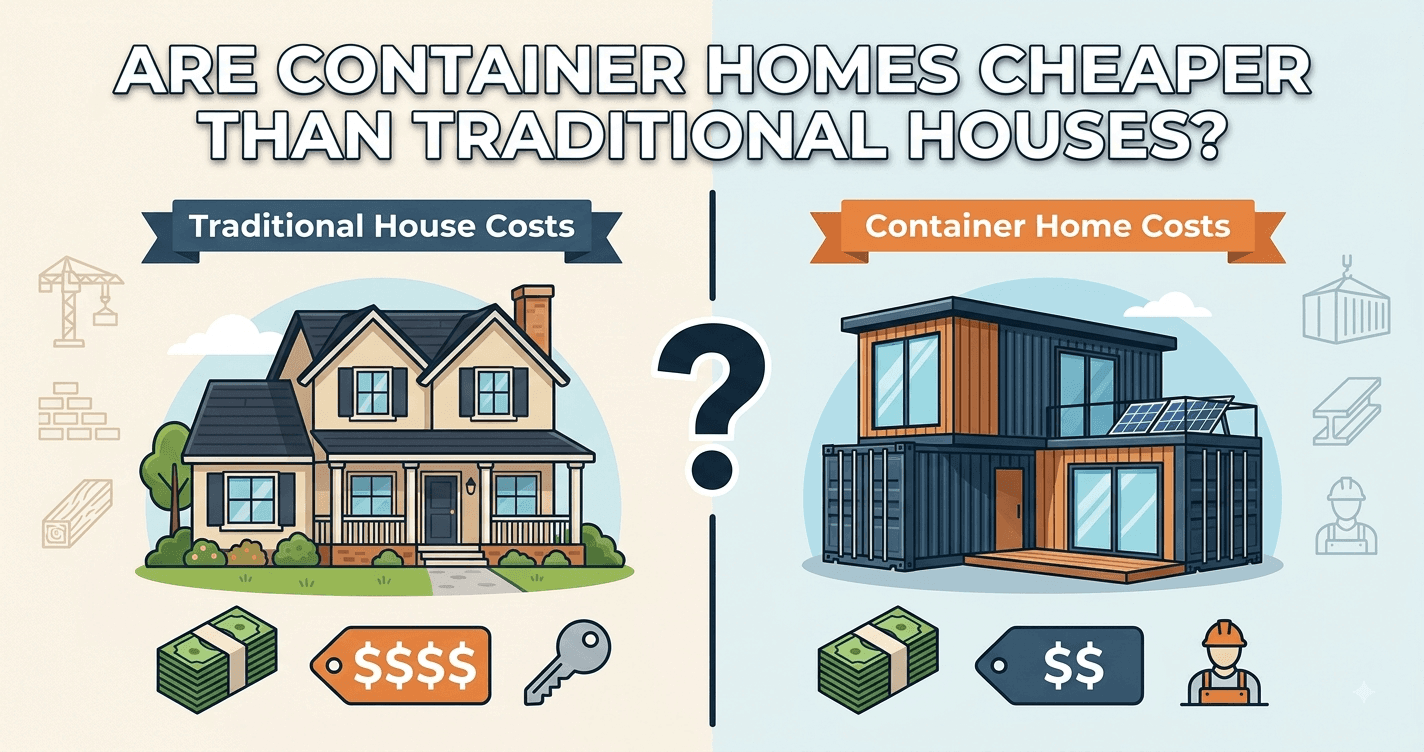
Are Container Homes Cheaper Than Traditional Houses? A Complete Cost Comparison
In recent years, the global housing market has witnessed a dramatic shift. Rising material prices, labor shortages, and skyrocketing real estate values have forced prospective homeowners, developers, and investors to seek innovative alternatives to traditional stick-built housing. Among the most popular modern housing solutions are prefabricated structures, modular homes, portable buildings, and shipping container houses.
The visual appeal of shipping container architecture—sleek, industrial, modern, and eco-friendly—is undeniable. However, the most frequent question prospective buyers ask is straightforward: Are container homes cheaper than traditional houses?
The short answer is yes, in most cases, container homes are significantly cheaper to build than traditional houses. On average, a custom container home can cost anywhere from 20% to 40% less than a conventional build of similar square footage. However, the total cost depends heavily on design complexity, site preparation, interior finishes, local regulations, and customization choices.
In this comprehensive guide, we will break down the true costs of container homes, compare them against traditional construction, explore key factors influencing your budget, and help you determine whether a container home from Trademola is the right financial choice for you.
Understanding the Baseline Costs: Container Homes vs. Traditional Homes
To accurately evaluate affordability, it helps to analyze construction expenses on a cost-per-square-foot basis.
- Traditional Houses: A standard custom, stick-built house in today’s market generally ranges from $150 to $350+ per square foot, depending on location, finishes, and contractor fees. A standard 2,000-square-foot traditional home often costs between $300,000 and $600,000, excluding land purchase.
- Shipping Container Homes: A professional container house typically costs between $100 and $220 per square foot. Simple single-container homes or basic portable buildings can cost as little as $25,000 to $45,000, while spacious, multi-container modular houses with high-end luxury finishes range from $80,000 to $200,000+.
Because container structures utilize prefabricated steel shells, they drastically streamline the early structural phase of construction, delivering rapid savings in both labor and materials.
Key Factors Influencing the Cost of Building a Container Home
While the structural steel hull provides an affordable baseline, several critical variables influence the final price tag of a finished container home project.
1. New vs. Used Shipping Containers
The heart of your home begins with the steel box itself. You generally have two choices:
- “One-Trip” (New) Containers: These containers have only carried cargo across the ocean once. They arrive in pristine condition, free from rust or heavy dents, making structural modifications easier. They generally cost between $3,500 and $6,000 each.
- Used Containers: Retired from shipping lines, used containers are more economical ($1,800 to $3,200), but they require careful inspection for rust, chemical spills, or structural fatigue.
2. Foundation and Site Preparation
Unlike portable buildings that may rest on simple gravel pads for temporary use, a permanent container house requires a solid foundation. Options include:
- Concrete Piers: The most cost-effective foundation choice for container homes, allowing proper ventilation beneath the steel structure while securing the frame.
- Slab Foundations: Excellent for full ground contact and insulation, though higher in material costs.
- Strip Foundations: Ideal for supporting the perimeter load points of intermodal containers.
Site preparation, including land clearing, grading, soil testing, and utility connections (water, sewer, grid power, or off-grid solar), usually adds between $5,000 and $15,000 to your total budget.
3. Insulation and Climate Control
Steel is an exceptional conductor of thermal energy. Without proper insulation, a container house can act like an oven in summer and a freezer in winter. Choosing the right insulation is non-negotiable for comfortable living:
- Closed-Cell Spray Foam: The industry gold standard for container houses. It creates a complete vapor barrier, prevents condensation against the corrugated steel, and maximizes energy efficiency within a slim profile.
- Panel Insulation / Prefabricated Wall Panels: Many modern modular houses utilize pre-engineered insulated panels to reduce installation labor and maintain high R-values.
4. Cutting, Welding, and Structural Reinforcements
Corrugated steel walls provide container houses with incredible load-bearing strength. However, cutting large openings for panoramic windows, sliding glass doors, or open-plan walkways removes structural integrity. Steel framing and box lintels must be welded back around cutouts to ensure structural stability, which contributes to specialized fabrication labor costs.
Container Homes vs. Traditional Construction: Cost Breakdown Table
To highlight where your savings actually come from, let us examine a side-by-side comparative estimate for a mid-sized residential dwelling (approximately 800–1,000 sq. ft.):
| Cost Category | Traditional Stick-Built House | Prefab Container House |
|---|---|---|
| Structural Frame & Sheathing | $40,000 – $75,000 (Lumber, framing labor) | $10,000 – $22,000 (Steel containers) |
| Foundation Work | $12,000 – $25,000 (Full slab/basement) | $5,000 – $12,000 (Concrete piers/pads) |
| Labor & Construction Time | $50,000 – $100,000+ (6–12 months) | $20,000 – $45,000 (2–3 months) |
| Roofing & Exterior Siding | $15,000 – $30,000 | $3,000 – $10,000 (Existing steel frame) |
| Interior Finishes & Utilities | $35,000 – $70,000 | $30,000 – $55,000 |
| Estimated Total Cost | $152,000 – $300,000+ | $68,000 – $144,000 |
How Container Homes Save You Money: The Primary Advantages
Beyond initial purchase price figures, container housing offers strategic financial advantages that lower total ownership costs:
1. Dramatically Reduced Construction Timelines
Time is money in real estate. Traditional home construction often suffers from weather delays, sub-contractor scheduling conflicts, and supply chain disruptions, lingering over 6 to 12 months. In contrast, prefabricated container houses are constructed in controlled factory environments. While site foundations are poured on-site, off-site construction takes place simultaneously. A modular container home can often be completed and installed on-site within 60 to 90 days, saving months of rental payments or construction loan interest.
2. Lower Labor Expenses
Framing a custom timber house requires extensive skilled labor over several weeks. A container home arrives with exterior walls, flooring sub-base, and roof already built-in structural steel. The reduction in trade labor hours translates directly into massive overall cost savings.
3. Extreme Durability & Minimal Exterior Maintenance
Corten steel container shells are engineered to withstand extreme marine conditions, ocean salt spray, heavy wind loads, and severe weather events. They are inherently resistant to termites, rot, wood-boring pests, and fires. This durability translates into lower long-term repair expenses and reduced homeowner insurance premiums in many regions.
4. Scalability and Portability
One unique benefit of container and portable buildings is scalability. You can start small with a comfortable single-container cabin or studio and later add additional modular containers as your budget or family expands. If life changes, some smaller portable units can even be relocated to new property.
Potential Hidden Costs to Plan For
While container structures present immense savings, transparent budgeting requires awareness of soft costs and potential hurdles:
- Permits and Local Zoning Laws: Building codes vary significantly by municipality. Some local authorities are deeply familiar with modular homes and container housing, while others may require specialized engineering stamps or architectural reviews, adding administrative fees.
- Crane and Delivery Logistics: Transporting heavy steel units to remote or tight city lots requires flatbed trucking and heavy-duty crane placement services. Ensure your site has adequate clearance for delivery vehicles.
- Custom Fabrication Costs: If your design calls for complex architectural cantilevers, extensive interior wall removal, or custom multi-story configurations, specialized welding costs can reduce some of your initial structural savings.
Are Container Homes Worth It?
When evaluated holistically—considering construction speed, structural longevity, initial expenditure, and architectural versatility—container homes offer exceptional value for money. For modern land-owners, vacation rental hosts (such as Airbnb developers), backyard office buyers, and eco-conscious homeowners, container architecture represents one of the smartest investments in modern building tech.
By opting for factory-built precision, buyers receive high-performance insulation, complete control over design, and high structural integrity at a fraction of standard construction expenses.
Discover High-Quality Modular and Container Housing Solutions with Trademola
Whether you are seeking an affordable primary residence, a versatile expansion for your property, an off-grid cabin, or high-quality commercial portable buildings, finding the right manufacturer is key to keeping costs low without sacrificing quality.
At Trademola, we specialize in premium-grade prefab houses, custom container houses, flexible modular homes, and durable portable buildings tailored to your exact specifications. Our engineered structures combine modern efficiency, superior thermal insulation, and exceptional craftsmanship to bring your architectural vision to life effortlessly.
Ready to explore cost-effective, stylish alternative living? Visit Trademola.com today to view our latest models, request a customized quote, and discover how easy it is to build your dream modular or container house!