

How Long Do Shipping Container Homes Last? The Ultimate Guide to Container House Lifespan and Durability
In recent years, alternative housing solutions have transformed the modern real estate landscape. From sleek modular buildings to versatile portable units, homeowners and developers are increasingly seeking durable, eco-friendly, and cost-effective alternatives to traditional brick-and-mortar construction. Among these innovative options, shipping container homes have emerged as a top contender for stylish, resilient living.
However, before investing in a prefab container house, one essential question naturally arises: How long do shipping container homes last?
The short answer is that a professionally constructed shipping container home can easily last between 25 and 50+ years. With optimal maintenance, high-grade protective coatings, and proper structural engineering, a container building can endure for over half a century, matching or even exceeding the lifespan of traditional wood-frame houses. In this comprehensive guide, we will explore the key factors that influence container house longevity, compare their durability to standard structures, and provide practical tips to maximize the lifespan of your custom modular home.
What is the Average Lifespan of a Container Home?
To accurately determine the expected service life of a container building, it is important to distinguish between an untreated steel sea container and a modern fully retrofitted container house.
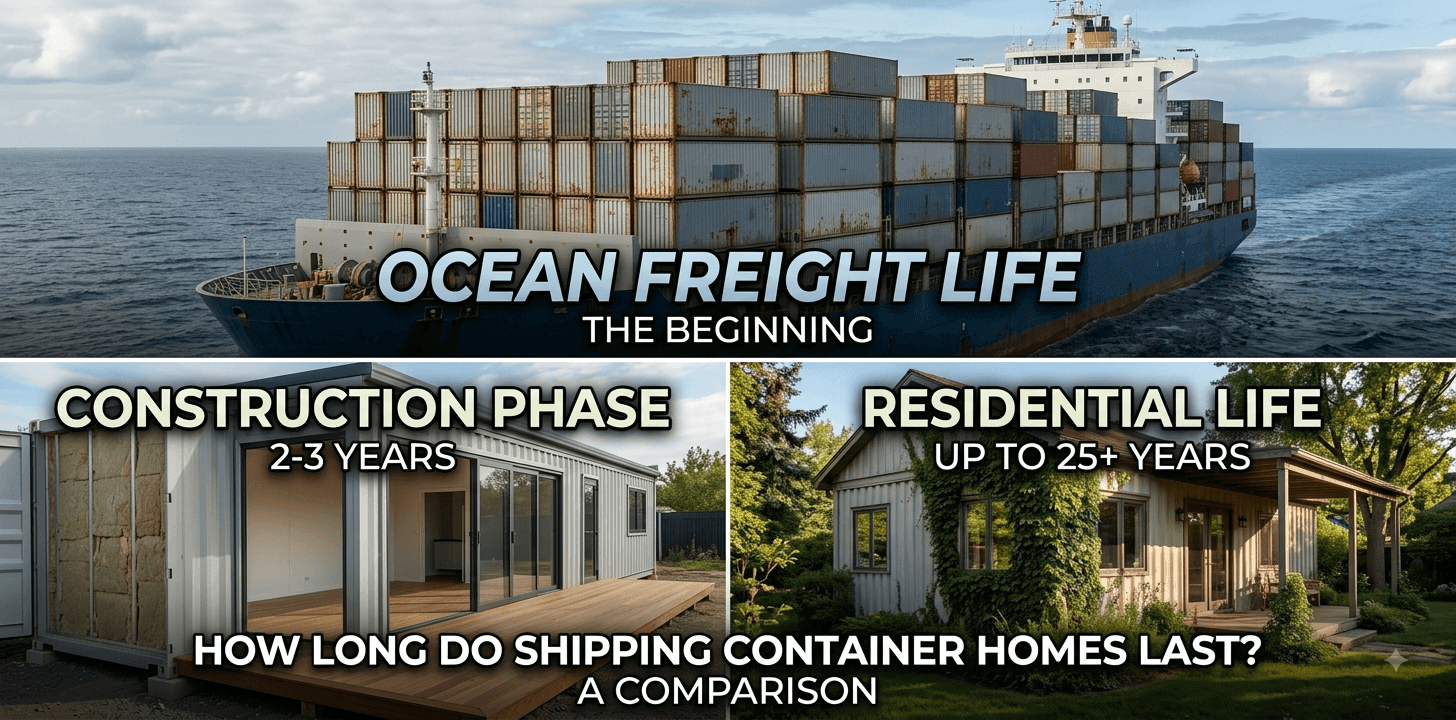
- Unmodified Shipping Containers: Used exclusively for ocean freight, a steel container exposed to saltwater, rough weather, and heavy industrial handling typically lasts 10 to 15 years before being retired from shipping service.
- Unmaintained Container Conversions: A basic container house placed directly on bare ground without rust mitigation or improper insulation may only last 15 to 25 years before structural degradation sets in.
- Engineered Prefab Container Homes: A modern, professionally built container house—constructed with premium steel, elevated foundations, marine-grade rust protection, and proper moisture control—boasts a lifespan of 30 to 50+ years with standard ongoing maintenance.
Because shipping containers are originally engineered to withstand treacherous ocean storms, heavy weight stacking, and extreme environmental stress, their structural core is inherently stronger than traditional residential building materials.
Key Factors That Determine Shipping Container House Longevity
While steel is renowned for its strength, a container home’s longevity is not solely determined by its core frame. Several vital design and environmental factors dictate whether a container building lasts two decades or a lifetime.
1. Container Quality and Initial Steel Condition
The foundation of any container build relies heavily on the quality of the raw container selected. Shipping containers generally fall into two categories:
- “One-Trip” Containers: These units are manufactured new in Asia, loaded with cargo for a single voyage, and sold upon arrival. They exhibit virtually no structural wear, rust, or damage, making them the gold standard for long-term modular housing builds.
- Used (Multi-Trip) Containers: Having spent 10 to 15 years in global trade, used containers often show surface rust, dents, and minor wear. While lower in cost, they require thorough sandblasting, structural reinforcement, and anti-corrosion treatments to ensure long-term durability.
In addition, quality container homes utilize containers constructed from Corten steel (weathering steel). Corten steel forms a stable, dense rust-like protective layer when exposed to the elements, significantly slowing down deeper metallic corrosion compared to standard carbon steel.
2. Effective Rust Prevention and Paint Systems
Rust is the primary threat to any steel structure. If left untreated, surface oxidation can weaken structural integrity over time. High-quality modular container builders protect the steel exterior using specialized coatings:
- Zinc-Rich Primers: Applied directly to raw steel to provide cathodic corrosion protection.
- Marine-Grade Elastomeric Paints: These flexible coatings create a waterproof barrier that expands and contracts with ambient temperature shifts, blocking moisture and UV radiation.
- Ceramic Thermal Coatings: Reflect thermal radiation while offering an additional shield against atmospheric moisture.
3. Foundation Type and Ground Clearance
Placing a heavy steel container directly on bare soil leads to premature rusting due to trapped ground moisture, standing water, and lack of subfloor ventilation. Elevating the structure on a solid, engineered foundation is essential for maximizing container house longevity.
Popular foundation choices for long-lasting container structures include:
- Concrete Piers: Elevates the home off the ground, allowing maximum airflow underneath to keep moisture at bay.
- Strip/Stem Wall Foundations: Offers perimeter support while keeping the subfloor well-drained and ventilated.
- Concrete Slab: Provides a continuous level base, provided waterproof vapor barriers are installed prior to pouring.
4. Insulation and Moisture Control (Preventing Internal Rust)
Because steel is an excellent thermal conductor, hot air inside a cold steel shell creates internal condensation—often referred to as “container sweat.” Uncontrolled internal moisture leads to hidden structural corrosion, mold growth, and rotting of interior timber framing.
To eliminate thermal bridging and condensation:
- Closed-Cell Spray Foam Insulation: Applied directly to the interior steel walls, closed-cell foam forms an airtight seamless moisture barrier, preventing humid air from ever contacting the bare steel surface.
- Exterior Insulation Systems: Installing insulation on the exterior facade keeps the steel shell within the thermal envelope of the building, drastically reducing indoor temperature swings.
5. Roof Design and Drainage
Factory-standard shipping containers feature slightly corrugated flat steel roofs designed for stacking, not shedding rainwater. Left flat, rainwater, snow, and debris can pool in low spots, accelerating paint breakdown and rust formation.
Adding a sloped roof (gable, shed, or pitched roof) over the original container top ensures efficient water shedding, prevents pooling, and adds an attractive architectural dimension to modern modular structures.
Container Homes vs. Traditional Homes: A Durability Comparison
How does a custom container home stack up against conventional residential construction methods?
| Structural Factor | Shipping Container Home | Traditional Wood-Frame Home | Standard Prefab/Modular Home |
|---|---|---|---|
| Expected Lifespan | 30 – 50+ Years | 50 – 100+ Years | 30 – 50+ Years |
| Structural Strength | Extremely High (Corten Steel) | Moderate (Timber framing) | High (Light steel or timber) |
| Resistance to Pests | 100% Termite & Insect Proof | Vulnerable to termites/rot | Depends on wall frame materials |
| Severe Weather Resistance | Exceptional (High wind & seismic resistance) | Moderate (Vulnerable to severe storms) | High (Engineered factory standards) |
| Primary Vulnerability | Rust / Condensation | Dry rot / Termites / Fire | Moisture intrusion at joints |
While traditional timber-framed houses can last a century when meticulously maintained, container homes offer far superior resistance against extreme weather, high winds, earthquakes, termites, and fire hazards. When built to regional building codes with appropriate waterproofing, modern container houses match the longevity of high-end standard modular structures.
Essential Maintenance Tips to Extend Your Container Home’s Lifespan
Proactive care is key to extending the life of any portable building or container home. Following a simple routine maintenance schedule ensures your container house remains structural and comfortable for decades:
- Inspect the Exterior Annually: Check external steel walls, structural welds, and corner castings for scratches, chips, or initial surface rust. Address minor rust spots immediately by sanding back to bare metal, applying zinc primer, and touching up with marine paint.
- Clear Roof Debris Regularly: Keep the roof clear of leaves, fallen branches, and standing water, especially after heavy storms or winter snow accumulation.
- Maintain Seals, Flashings, and Windows: Inspect caulking, window gaskets, door seals, and flashing around cutouts regularly to stop water ingress before it reaches internal frames.
- Monitor HVAC & Indoor Humidity: Use energy-efficient dehumidifiers or HRV/ERV ventilation systems to maintain indoor humidity levels below 50%, ensuring dry, comfortable indoor conditions year-round.
- Ensure Clean Foundation Drainage: Periodically check that perimeter drains, gutters, and downspouts direct rainwater away from the foundation base.
Why Choose Quality Modular & Prefab Solutions from Trademola
When considering modular housing, prefab solutions, or portable buildings, partnering with an experienced provider makes all the difference. At Trademola.com, we specialize in high-quality prefab houses, modular buildings, container houses, and portable structures engineered for maximum durability, structural safety, and aesthetic versatility.
By leveraging precision manufacturing techniques, heavy-duty anti-corrosion finishes, and high-performance thermal insulation systems, Trademola delivers long-lasting container and modular structures tailored to your specific climatic needs—ensuring a secure, sustainable investment for decades to come.
Conclusion
So, how long do shipping container homes last? When engineered correctly, placed on a raised foundation, insulated against internal moisture, and treated with modern anti-corrosion coatings, a shipping container home can easily offer a vibrant, durable service life of 25 to 50+ years.
With minimal termite risk, unmatched resistance to harsh wind and weather conditions, and low environmental impact, modular container homes represent a safe, stylish, and durable alternative to traditional housing. Explore the wide range of durable prefab houses, container buildings, and portable structures at Trademola.com to start building your long-lasting home today.