

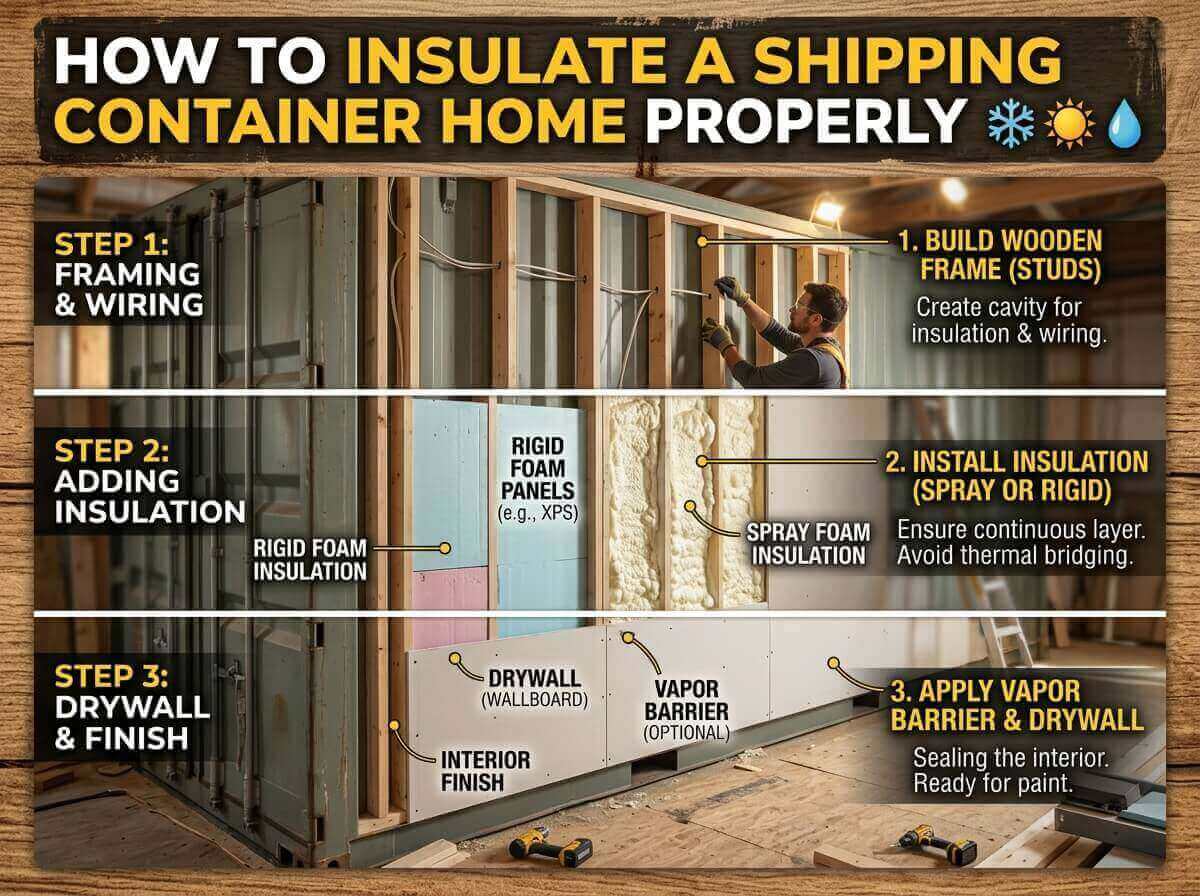
How to Insulate a Shipping Container Home Properly: The Ultimate Guide
Shipping container homes have taken the modern architectural world by storm. As a sustainable, cost-effective, and versatile alternative to traditional stick-built construction, these steel structures offer endless possibilities for eco-conscious homeowners, DIY builders, and commercial developers. However, transforming a steel cargo crate into a comfortable, energy-efficient living space requires overcoming one major technical challenge: temperature control.
Steel is an exceptional conductor of heat. Without proper insulation, a container house can quickly turn into a sweltering oven in the summer and a freezing icebox in the winter. Furthermore, improper insulation techniques can lead to severe condensation, rust, and indoor air quality issues that compromise the structural integrity of your build. Whether you are constructing a custom DIY project or exploring engineered prefab container homes and portable buildings from industry platforms like Trademola.com, understanding how to insulate a shipping container home properly is key to long-term comfort, safety, and durability.
In this comprehensive guide, we will break down the building science, compare top insulating materials, and provide a step-by-step installation process for insulating container houses effectively in any climate.
Why Proper Insulation is Crucial for Container Homes
Steel shipping containers were engineered to withstand harsh ocean transit and heavy cargo loads, not to regulate interior human comfort. To turn these industrial shells into livable modular homes, you must address two primary physical challenges: thermal bridging and moisture accumulation.
The Thermal Bridging Challenge
Thermal bridging occurs when a highly conductive material—like steel—provides a direct pathway for heat to travel across a thermal barrier. Because steel conducts heat thousands of times faster than wood or air, ambient outdoor temperatures will rapidly transfer through the corrugated metal walls of an uninsulated container. Even if you insulate between interior wall studs, exposed steel framing elements will act as thermal bridges, draining heat out of your home during winter and pulling unwanted solar heat inside during summer.
Managing Condensation and Moisture Control
The second major risk in container home construction is condensation, often referred to as “container rain.” When warm, moisture-laden indoor air comes into contact with cold steel walls, it rapidly cools to its dew point. Water droplets condense on the inside of the metal shell, creating a hidden breeding ground for mold, mildew, and corrosion. Over time, trapped moisture rots wall framing, degrades insulation performance, and jeopardizes structural safety. A proper insulation system acts not only as a thermal barrier, but also as an airtight moisture vapor barrier to prevent condensation before it starts.
Understanding R-Value in Prefab and Modular Construction
Before selecting insulation materials for your shipping container home or portable building, you must understand R-value. R-value measures an insulating material’s resistance to conductive heat flow. The higher the R-value per inch, the greater the insulating effectiveness.
Required target R-values vary significantly based on geographic climate zones:
- Mild / Temperate Climates: Wall R-value of R-13 to R-15; Roof R-value of R-30.
- Cold / Severe Climates: Wall R-value of R-20 to R-28; Roof R-value of R-40 to R-49.
Achieving a high R-value inside a container house presents a spatial trade-off. Every inch of interior insulation reduces your usable floor area. Consequently, choosing high-performance insulation materials with maximum R-value per inch is essential for preserving square footage in compact prefab houses and modular spaces.
Interior vs. Exterior Insulation: Which Should You Choose?
When designing your modular house or container structure, one of the first decisions is whether to insulate the interior or exterior of the steel envelope.
Interior Insulation: Pros and Cons
Insulating the inside of the container is the most common approach, especially for single-unit container homes, off-grid cabins, and portable office units.
- Pros: Preserves the iconic industrial aesthetic of the exterior corrugated steel; protects the insulation material from weather exposure; easier to approve under local suburban aesthetic zoning rules.
- Cons: Reduces internal living dimensions by 3 to 6 inches per wall; requires careful framing and meticulous sealing to prevent interior thermal bridging.
Exterior Insulation: Pros and Cons
Applying insulation to the outside of the steel shell turns the internal steel structure into a thermal mass that helps stabilize indoor temperatures.
- Pros: Preserves 100% of internal floor space; creates a continuous exterior insulation envelope that completely eliminates thermal bridges; ideal for complex multi-container modular buildings.
- Cons: Covers up the signature corrugated steel exterior; requires external cladding (such as fiber cement siding, composite panels, or timber siding) to protect insulation from UV rays and physical impact; increases the overall building footprint.
Top Insulation Materials for Container Houses
Not all traditional house insulation products perform well against sheet metal. Below are the top insulation materials recommended for modern container homes and modular buildings.
1. Closed-Cell Spray Foam Insulation (The Gold Standard)
Closed-cell spray polyurethane foam (SPF) is widely recognized by prefab home manufacturers and custom builders as the absolute best insulation for shipping container homes.
- R-Value: Approximately R-6.5 to R-7.0 per inch.
- Why It Works: Closed-cell spray foam expands upon application, adhering directly to corrugated steel surfaces and filling every gap, seam, and contour. It forms a completely seamless air barrier and vapor barrier simultaneously, permanently blocking air leakage and preventing condensation.
- Considerations: Requires specialized personal protective equipment and professional installation techniques, though DIY spray foam kits are available for smaller portable buildings.
2. Rigid Foam Board Insulation (EPS, XPS, and Polyiso)
Rigid foam panels are a popular choice for DIY builders looking for a cost-effective, manageable alternative to spray foam.
- Expanded Polystyrene (EPS): ~R-3.8 to R-4.4 per inch. Lightweight and budget-friendly.
- Extruded Polystyrene (XPS): ~R-5.0 per inch. Highly water-resistant and rigid.
- Polyisocyanurate (Polyiso): ~R-6.0 to R-6.5 per inch