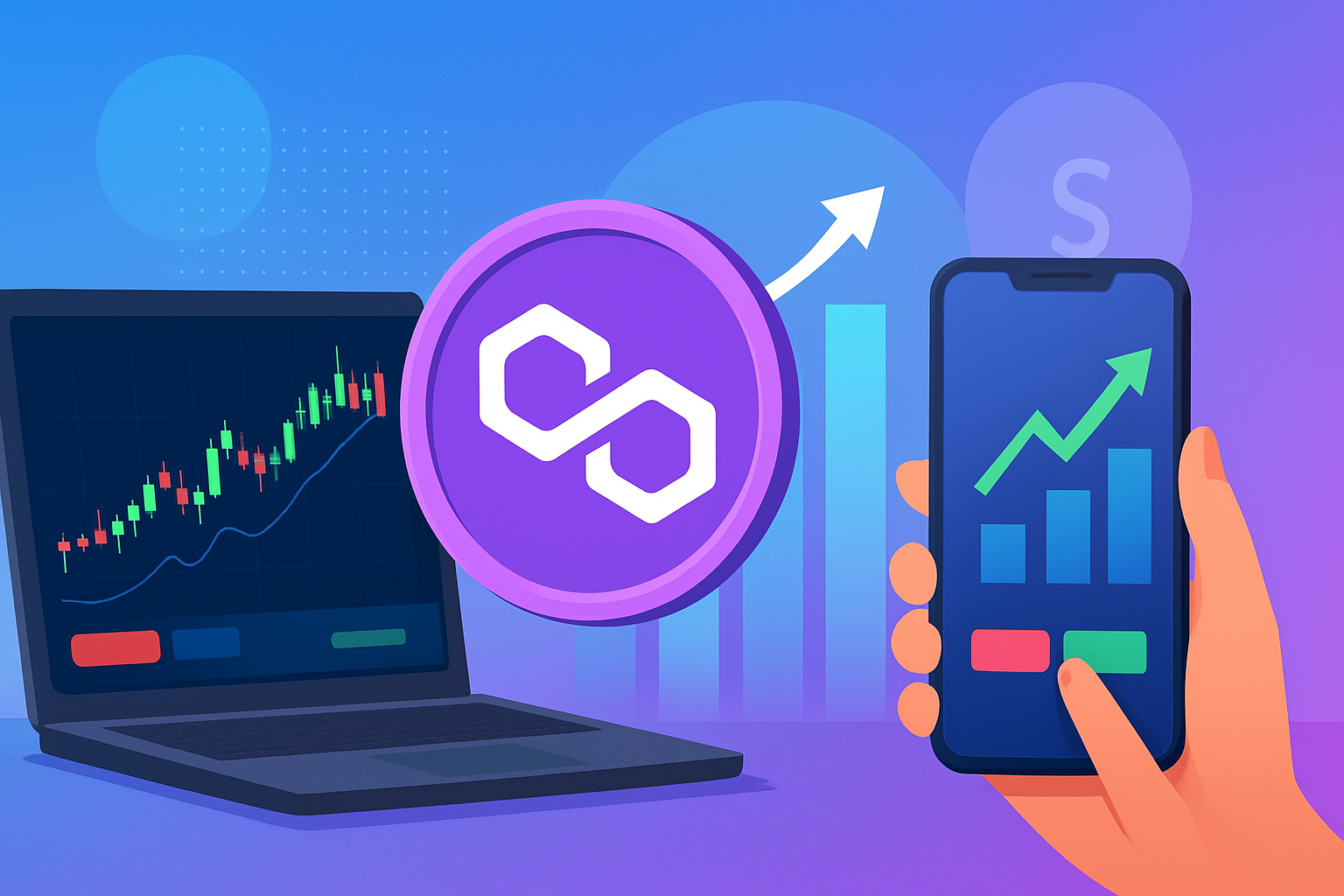
Polygon (POL) History: From MATIC to POL – Everything Traders Need to Know
The digital asset landscape evolves rapidly. Whether you focus on active cryptocurrency trading, explore high-liquidity opportunities in forex trade, or look for consistent online earning methods through decentralized finance (DeFi), staying ahead of major token upgrades is essential. One of the most significant architectural shifts in recent crypto history is the evolution of Polygon’s native token from MATIC to POL. In this article, we explore the history of Polygon, the technical necessity behind the token migration, and how this change impacts your trading and earning strategies on Trademola.
The Origins: From Matic Network to Ethereum’s Scaling Solution
The journey began in 2017 when three developers founded Matic Network in India. At the time, the Ethereum network was struggling with heavy congestion and surging gas fees. Matic was built as a Layer-2 scaling solution, utilizing a Proof-of-Stake (PoS) sidechain and Plasma chains to offload transactions from Ethereum while maintaining security.
For early Web3 users and digital asset investors, Matic offered an affordable, high-speed alternative to mainnet Ethereum, laying the groundwork for low-cost transactions and accessible crypto earning strategies.
The Rebranding: Scaling Up to Polygon in 2021
By early 2021, the blockchain ecosystem needed more than just a single sidechain. To meet this demand, Matic Network rebranded to Polygon in February 2021. The vision expanded from a single scaling solution into “Ethereum’s internet of blockchains”—a modular framework for building interconnected blockchain networks.
Despite the platform rebranding to Polygon, the ecosystem retained MATIC as its ticker symbol for paying gas fees, governance, and network staking. During this bull run, Polygon gained massive adoption, attracting major corporate partnerships, decentralized exchanges (DEXs), and traders looking to diversify away from traditional markets like forex trade into high-growth crypto assets.
The Era of Polygon 2.0 and the MATIC to POL Migration
As zero-knowledge (ZK) rollup technology matured, Polygon unveiled its ambitious “Polygon 2.0” vision. The goal was to aggregate liquidity across multiple ZK-powered Layer-2 chains seamlessly. However, the existing MATIC token had functional limitations that prevented it from securing an infinite network of interconnected chains.
This led to the creation of POL, described by the development team as a “hyperproductive token.” The 1:1 token migration from MATIC to POL officially began in late 2024, marking the start of a new technological era for the network.
Why POL is Called a “Hyperproductive” Token
POL introduces fundamental improvements over MATIC that benefit both institutional investors and retail traders:
- Multi-Chain Staking: Unlike MATIC, which was restricted to validating the primary PoS chain, POL enables stakers to validate multiple chains across the Polygon network using a single pool of tokens.
- Multiple Revenue Streams: Validator nodes can earn rewards from various specialized chains, boosting passive online earning potential for stakers.
- Zero-Knowledge Security: POL directly powers the cryptographic proofs required to unite fragmented liquidity across the aggregated Polygon ecosystem.
What the POL Upgrade Means for Crypto Traders and Online Earners
For active participants in cryptocurrency trading, the transition to POL opens up fresh market dynamics. Just as currency traders react to central bank interest rates in the forex trade market, crypto traders should keep a close watch on POL’s staking yield rates, exchange liquidity, and network migration metrics.
If your primary focus is online earning, POL presents an upgraded value proposition. By delegating or staking POL tokens, users can generate compounding staking rewards supported by real utility across an expanding multi-chain architecture. Ensure that your holdings are migrated to the new POL contract on supported platforms to keep earning uninterrupted yields.
Conclusion
The transformation from MATIC to POL represents far more than a simple ticker change—it reflects Polygon’s progression from an early sidechain into a comprehensive multi-chain ecosystem powered by zero-knowledge proofs. Whether you engage in fast-paced cryptocurrency trading, apply risk-management rules learned from the forex trade markets, or seek passive online earning through staking, understanding the history and utility of POL equips you to make smarter financial decisions in today’s dynamic market.