

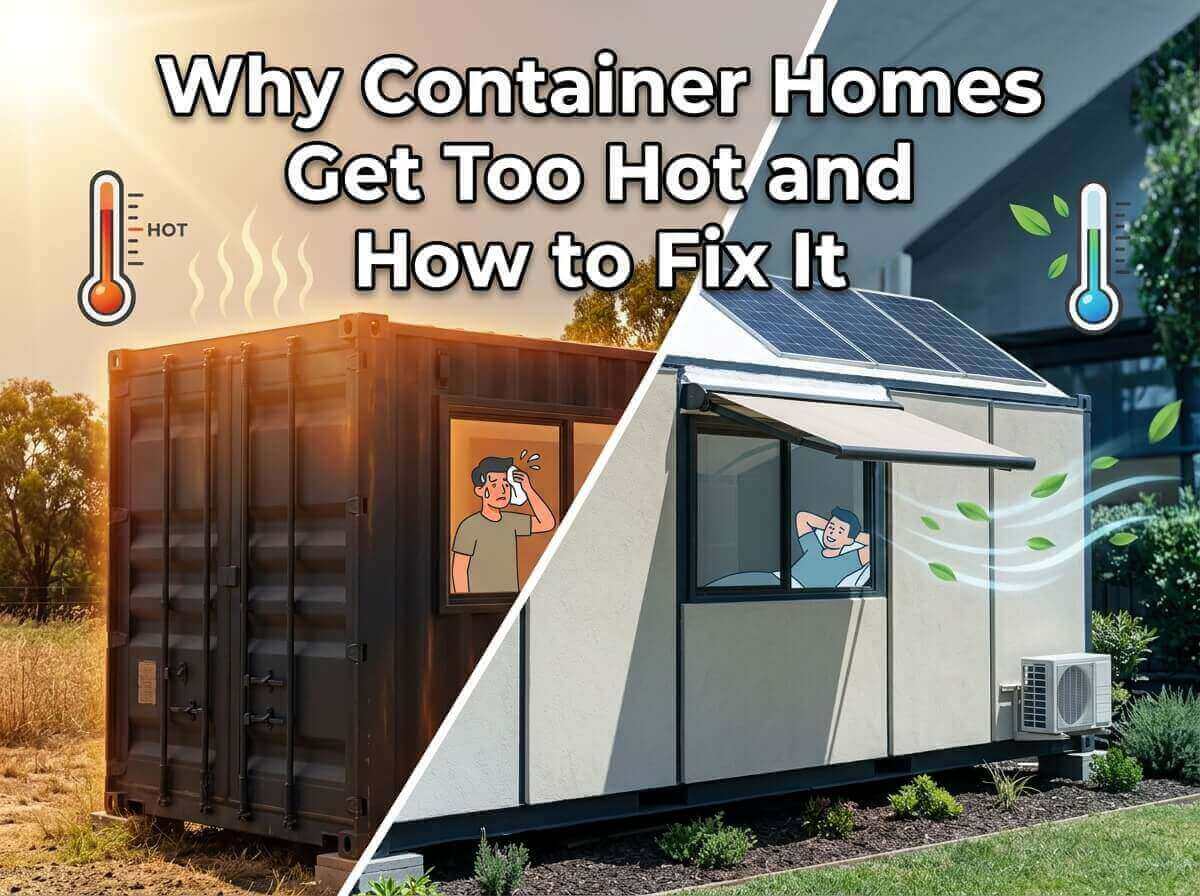
Why Container Homes Get Too Hot and How to Fix It: Complete Thermal Control Guide
Shipping container homes have revolutionized modern architecture. Prized for their structural durability, modern industrial aesthetic, eco-friendliness, and rapid construction timelines, these modular buildings have become a premier choice for residential living, remote cabins, and commercial spaces. However, prospective buyers and DIY builders quickly encounter one glaring challenge: thermal performance. Without proper engineering, a steel shipping container can turn into an oven during warmer months.
If you have ever wondered why container homes get so hot, or if you are currently trying to regulate temperatures in a portable building, you are not alone. Steel is an exceptional conductor of heat, meaning direct sunlight transfers thermal energy straight into your living space. Fortunately, with smart architectural design, proper insulation, and strategic cooling systems, you can easily maintain a comfortable indoor climate year-round.
In this comprehensive guide, we will explore the science behind heat retention in steel structures and provide actionable, proven methods to keep your container house cool, efficient, and comfortable.
The Science: Why Do Container Homes Get So Hot?
To fix temperature issues in modular housing, you first need to understand the physical mechanisms causing excessive heat buildup inside shipping containers.
1. High Thermal Conductivity of Steel
Traditional residential houses are built using wood, brick, or concrete—materials that possess relatively low thermal conductivity or high thermal mass. In contrast, standard shipping containers are made of Corten steel. Steel has a thermal conductivity rate roughly 300 times higher than wood. When radiant heat from the sun strikes the exterior steel walls, the material rapidly absorbs energy and radiates that heat directly into the interior space.
2. Low Thermal Mass
Thermal mass refers to a material’s capacity to absorb, store, and slowly release heat. Steel panels are thin—typically around 14-gauge (approx. 2 mm thick). Because the steel lacks physical mass, it cannot store heat slowly; instead, it immediately transfers energy inside. The moment the sun hits the metal roof, the interior temperature begins to rise exponentially.
3. The Industrial “Airtight” Box Effect
Shipping containers are manufactured to withstand severe maritime conditions. They are engineered to be watertight and airtight to protect cargo at sea. While airtightness is great for structural integrity, it prevents natural air exchange. Without intentional architectural modifications, trapped heat and humidity have nowhere to go, creating a greenhouse effect inside the building.
4. Dark Exterior Paints and Solar Absorption
Most industrial shipping containers come painted in dark, industrial shades like deep red, blue, green, or brown. Dark colors absorb up to 90% of the solar radiation that strikes them. When applied to high-conductivity steel, dark paint transforms the entire roof and side panels into massive radiant heaters.
How to Cool Down Your Container Home: 5 Effective Solutions
Transforming a high-heat steel structure into an energy-efficient, temperate container house requires a multi-layered approach. Here are the top engineered solutions and design strategies to eliminate excess heat.
1. High-Performance Container House Insulation
Insulation is the single most important factor in governing indoor temperature for any prefab house or portable building. Choosing the right insulation type and installing it correctly creates a powerful thermal break between the exterior steel and your interior living area.
Closed-Cell Spray Foam Insulation
Closed-cell spray foam is widely considered the gold standard for shipping container homes. Applied directly to the corrugated steel walls (either interior or exterior), spray foam expands to fill every seam, ridge, and micro-gap.
- High R-Value: Delivers an impressive R-value of roughly 6.0 to 6.5 per inch, providing superior thermal resistance in thin wall cavities.
- Seamless Vapor Barrier: Eliminates air pockets where warm air meets cold steel, completely preventing harmful condensation and rust formation.
- Structural Rigidity: Adds physical strength to the container’s side walls.
Insulated Sandwich Panels (SIPs)
For factory-engineered prefab homes, Polyurethane (PU) or Mineral Wool sandwich panels are the industry norm. These pre-manufactured wall systems feature thick insulation cores sandwiched between protective sheets, delivering outstanding climate control right out of the factory.
External Insulation Systems
Insulating the exterior of the shipping container is one of the most effective ways to mitigate heat. By placing insulation on the outside of the steel shell, the steel remains at room temperature inside the thermal envelope, stopping solar heat before it ever enters the building core.
2. Reflective Roofs, Overlays, and Green Roofs
Because the roof receives the highest concentration of direct solar radiation throughout the day, treating your container roof yields the immediate drop in interior temperature.
Elastomeric Reflective Paint
Applying a specialized elastomeric reflective roof coating—often referred to as cool roof paint—can reflect up to 85%–90% of sunlight. White or off-white solar-reflective coatings drastically reduce exterior surface temperatures, sometimes lowering metal temperatures by up to 50°F (10°C to 25°C).
Secondary Roofs (Fly Roofs)
Installing a secondary shade roof over your container house creates a protective umbrella. A fly roof absorbs direct sunlight and leaves an air gap between the secondary roof and the container structure. This gap allows breeze to flow continuously, naturally sweeping away hot air before it touches the container’s steel skin.
Living Green Roofs
A green roof involves planting soil and vegetation over a waterproof membrane on top of the container. Plants naturally absorb solar energy for photosynthesis while the soil acts as heavy thermal mass, providing unmatched natural insulation and aesthetic beauty.
3. Strategic Shading and Window Placement
Windows are essential for natural light, but unshaded glass can exacerbate interior heat. Implementing smart passive solar design principles keeps solar heat gain under control.
- Low-E Glass Windows: Install double or triple-pane windows with Low-Emissivity (Low-E) coatings. These coatings reflect infrared light while allowing visible light to pass through.
- External Awnings and Louvers: Block direct sunlight before it reaches the window glass using exterior window awnings, fixed overhangs, or adjustable louvers.
- Building Orientation: When placing modular houses on site, position the smallest wall surfaces toward the intense afternoon sun (usually West) and maximize openings toward prevailing summer winds for natural cross-ventilation.
- Landscaping: Plant broadleaf deciduous trees on the southern and western sides of your container building. They block harsh summer sun while dropping leaves in winter to allow natural solar warming.
4. Advanced Mechanical Ventilation and HVAC Systems
Even with great insulation, active cooling and continuous air movement are necessary in warm climates to maintain healthy indoor air quality.
Ductless Mini-Split Heat Pumps
Ductless mini-split systems are ideal for modular buildings, portable offices, and container homes. They offer exceptional energy efficiency, require minimal wall penetrations, and provide both powerful air conditioning in summer and heating in winter.
Energy Recovery Ventilators (ERVs)
Because insulated container homes are extremely tight, stale indoor air must be constantly refreshed. An ERV system exhausts stale, warm air while bringing in fresh outdoor air, pre-cooling the incoming air stream in the process to conserve energy.
Solar Attic Fans and Whirlybirds
Installing solar-powered roof exhaust vents or passive turbine vents pulls rising heat out of ceiling cavities and high points within the home, driving a continuous cycle of natural convection.
5. Incorporating Interior Thermal Mass
Steel cannot store heat effectively, but you can introduce materials inside your container home that do. Adding interior thermal mass stabilizes temperature swings inside the home.
- Concrete Flooring: Polished concrete floors act as thermal sponges, absorbing daytime heat from the indoor air and releasing it slowly at night when ambient temperatures drop.
- Drywall and Stone Accent Walls: Standard gypsum board or decorative stone walls inside the container absorb ambient ambient warmth, slowing down room heating rates during peak afternoon hours.
Factory-Engineered Prefab Solutions vs. DIY Modifications
While retrofitting an old shipping container yourself is possible, achieving perfect thermal isolation requires deep engineering knowledge. Incorrect insulation techniques can lead to trapped moisture, interstitial condensation, unseen rust, and severe overheating issues.
This is where modern prefabricated container homes and modular buildings excel. Factory-built units designed by experts like Trademola are specifically engineered to eliminate thermal bridging from the drawing board. Modern manufactured portable buildings integrate factory-sealed structural insulated panels, thermal breaks, pre-installed HVAC ducting, and reflective roof systems during assembly, ensuring your home stays cool, safe, and energy-efficient from day one.
Summary Checklist: How to Keep Your Container Home Cool
- Insulate properly: Use closed-cell spray foam or high-density rigid insulation panels to eliminate thermal bridges.
- Reflect heat: Paint the roof white or apply reflective elastomeric coatings to bounce UV light away.
- Add shade: Install secondary roofs, awnings, or plant shade trees around the building perimeter.
- Install smart glass: Choose double-glazed Low-E windows with proper exterior shading.
- Ventilate right: Use ductless mini-splits paired with ERVs or solar roof vents for optimal airflow.
Conclusion
So, do container homes get too hot? Without proper design and insulation, yes—unmodified steel shipping containers absorb heat rapidly. However, heat retention is entirely preventable. By applying high-performance insulation, reflective roof systems, passive shading, and smart HVAC controls, a container house can deliver the same thermal comfort and energy efficiency as a top-tier modern residential home.
Whether you are planning a minimalist off-grid getaway, an expanded modular office, or a custom luxury prefab home, starting with modern modular engineering guarantees year-round comfort in any environment. Explore professionally engineered container solutions and prefabricated housing designs at Trademola to build your dream temperature-controlled space today.